


Best bartender companies for events know how to lead
In events, the ability to use both your intellect and your creativity makes it an exciting field! The greatest inspiration arises from weaving these two together to create something magical. Between the client’s vision, the planner’s creativity and every vendor’s efforts, the event becomes a collaborative work of art. The challenge remains that the nature of events makes them uncertain, chaotic and fluid environments. How event companies plan and execute events ultimately dictates their reputations. Their ability to plan well, coordinate effectively and maintain quality, remains the gold standard of service. For waitstaff and bartender companies, it also requires knowledge of managing large, temporary workforces. But beyond these qualities, what other advantages can all event companies wield that will help them to win consistently?
The Event Staffing Field Manual: On Bartenders
The Event Staffing Field Manual is dedicated to event professionals who seek the high mark of excellence for themselves and their companies. It seeks to illuminate reachable goals that any event company can employ to good effect. On Bartenders goes further in synthesizing universal truths from the prescriptive annals of military theory and the history of warfare. The many parallels between combat and events represent opportunities for us to gain fresh insights into our own industry. Specifically, how do bartender companies survive and thrive in the dynamic and unpredictable arena of events. Like war, events have the ability to destroy reputations and livelihoods in the blink of an eye. However, instead of succumbing to a fatalistic mindset or becoming desensitized to caring, we must seek to preempt those outcomes. By seeking wisdom across disciplines, this manual and its subparts seek to foster success for the benefit of all event companies.
Reputable bartender companies use combined arms
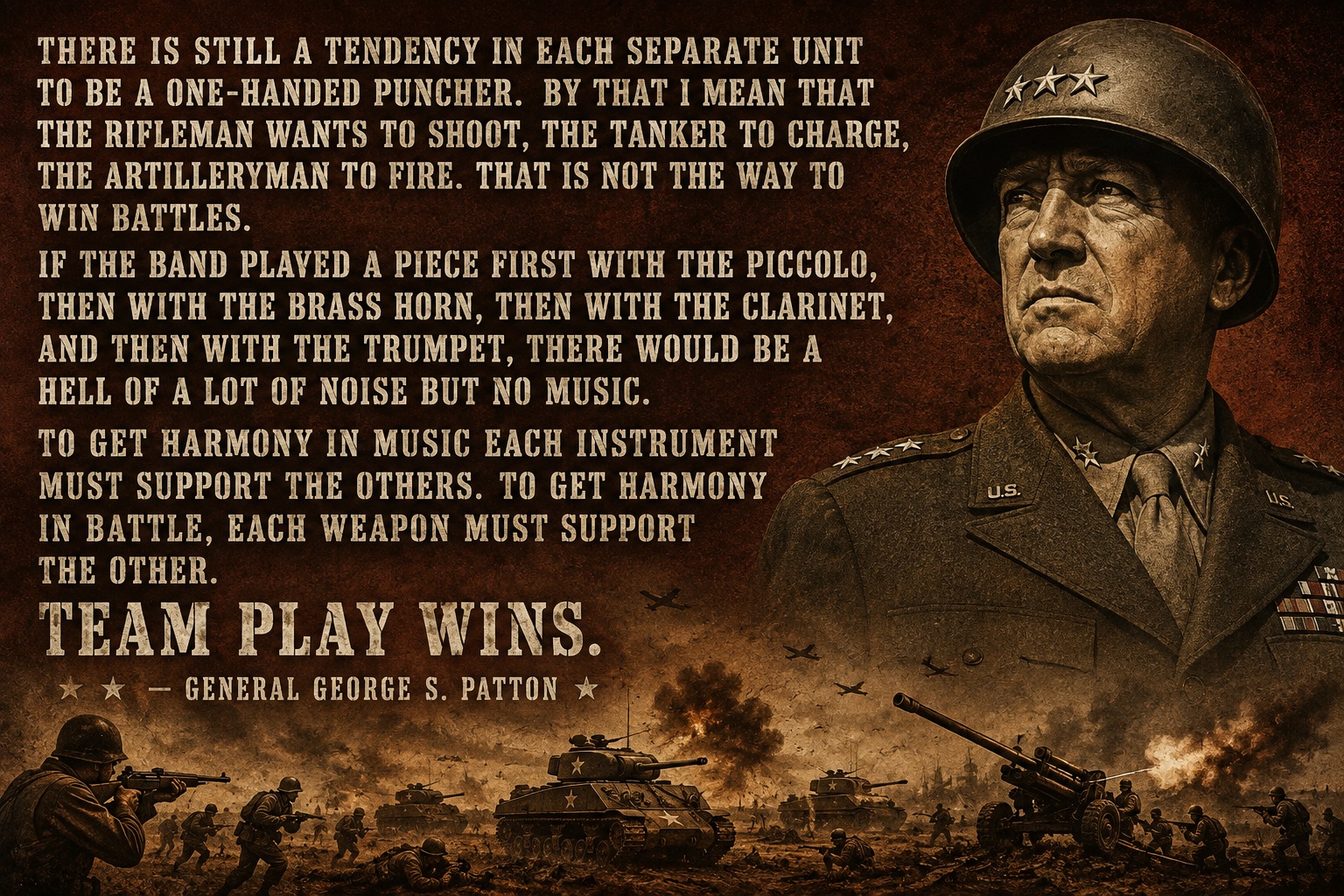
We use the concept of combined arms when we leverage all conditions and assets under our control to direct an event’s narrative. For event companies, possessing mutually-supporting management, leads and teams, tends to achieve the greatest possible results. Each of these complements and upholds the other, together creating an effective operating force. In this way vulnerabilities are shored up and reputations are protected. For example, bar captains coming across critical, front-line information can relay it up to managers. In this way, they act as the eyes and ears for company management. In return, managers troubleshoot issues, allowing their teams to quickly move past them. Further up the chain of command, owners relay commander’s intent and then trust subordinates with situational decisions. These altogether represent the layering of complementary capabilities. When looking at the most reputable bartender companies, this practice exists as standard procedure, and comes naturally to their leadership.
Bar staff for events use the concept of cover and move
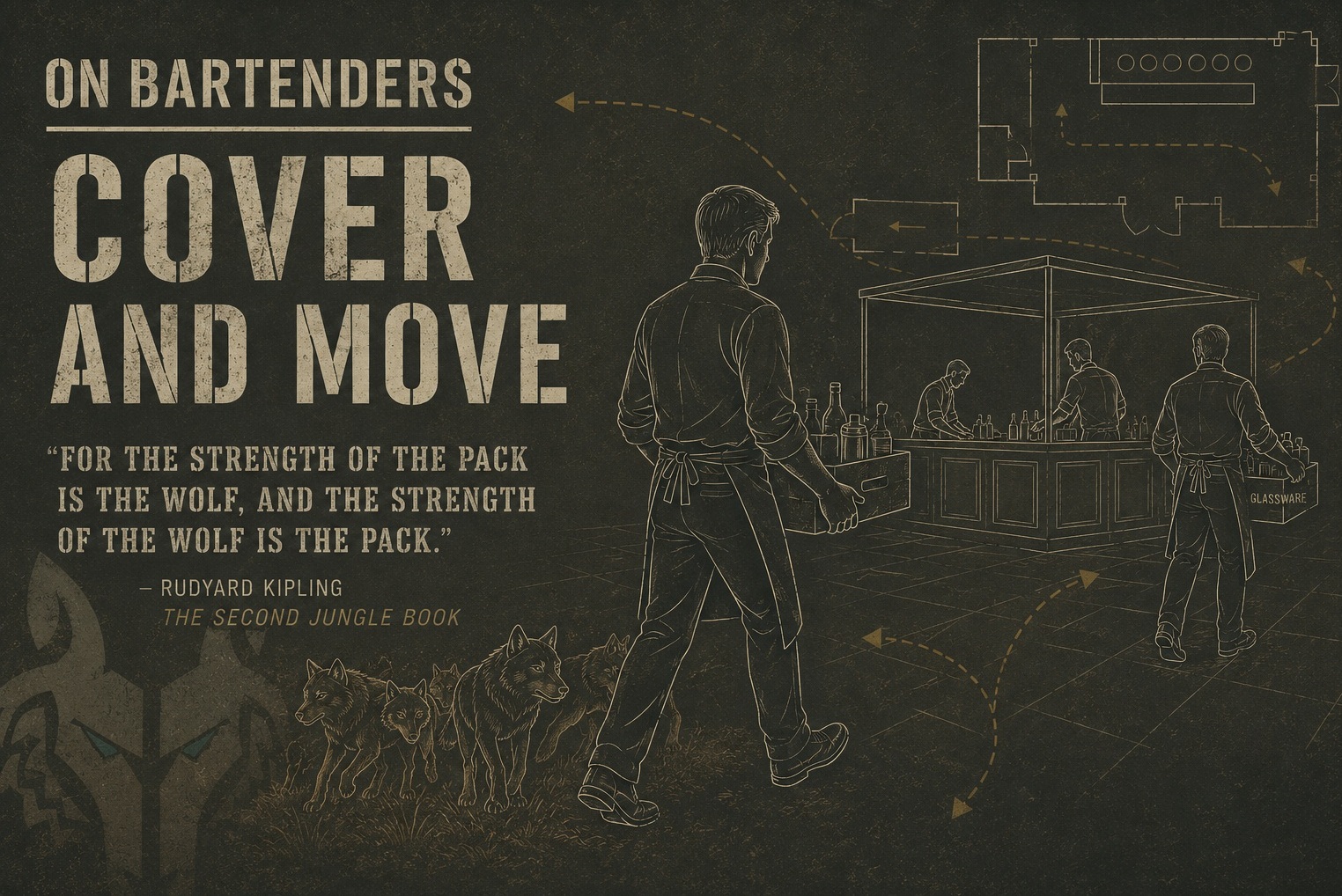
The nature of events at times presents us with dilemmas that appear unwinnable. Veteran leaders understand the difficulties of navigating client expectations, staff egos and unexpected points of friction. However, regardless of challenging timelines, difficult personalities or unexpected issues, mediocrity cannot be entertained. Luckily, the friction that bartender companies in particular face can be managed through flexible chains of command, subordinate adaptability, and in situ decisiveness. These underpin the philosophy of cover and move. Whether making the decision to order more ice, or handling raucous and inebriated guests, ‘suits’ can cover, while their teams move. Captains in turn can create follow-on orders from initial instructions to maintain operational tempo. Events require this kind of mutually supportive action to succeed. Combined with adherence to the Rule of Momentum which mandates action over inaction, they together seek to dictate the outcome in our favor.
Leaders of bartenders for events must use boldness of action
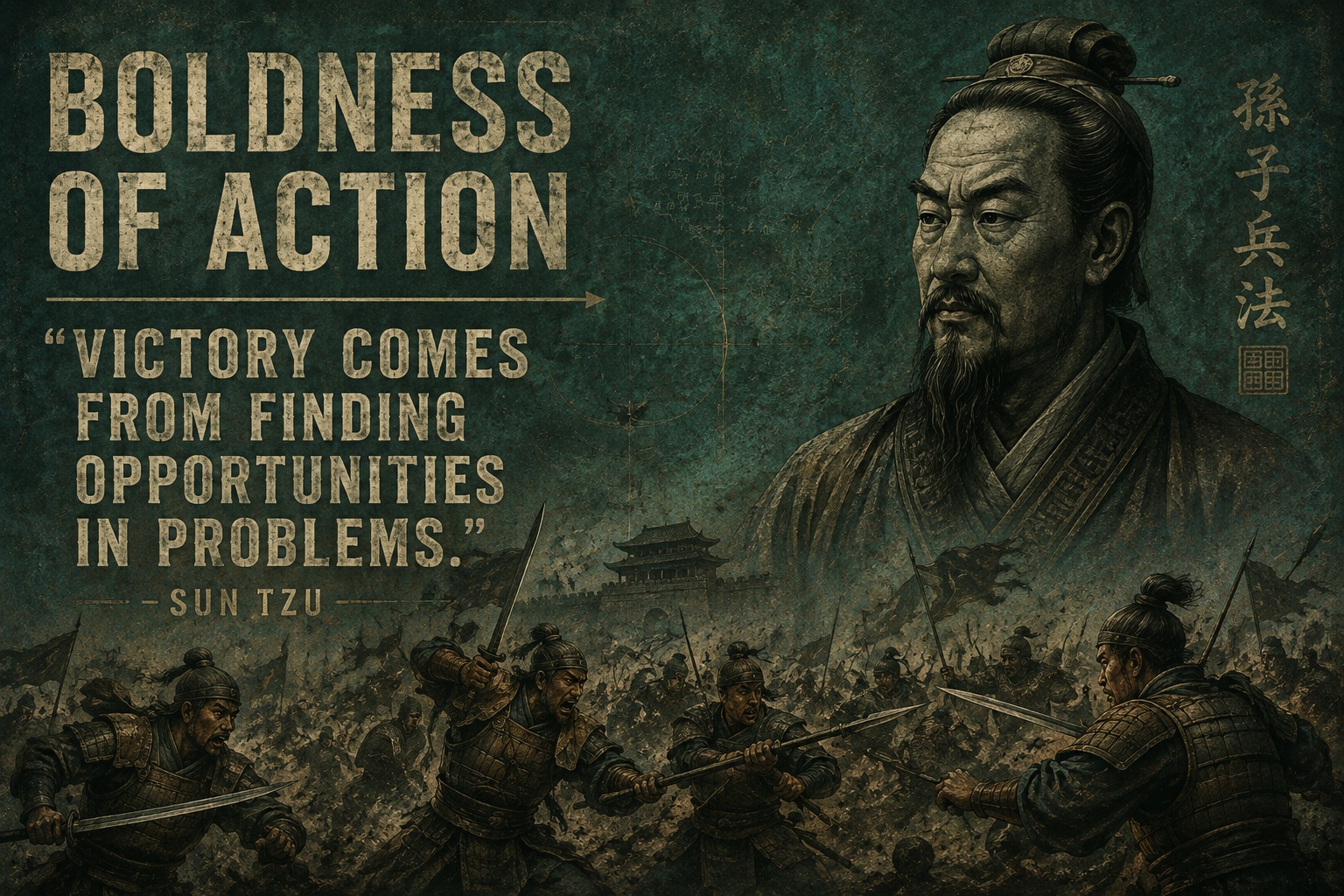
Boldness of action provides another means to gain advantage over the institutional dysfunction of events. It creates temporary positional advantages that help keep pace with disruptions to plans. From reallocating bar backs to heavily hit bars to conscripting bartenders to perform table side wine service, leaders must possess boldness of action. They must possess a stubborn resistance to failure, and an unwavering determination to win. While stopping short of personifying chaos, it nevertheless remains a constant foe to dissipate and defeat. Therefore, the ability to decide quickly and then create decisive next steps underpins boldness of action. However, while it can be used to great affect, it does not substitute for proper planning and coordination of assets.
The best bartender companies initiate planning with clients
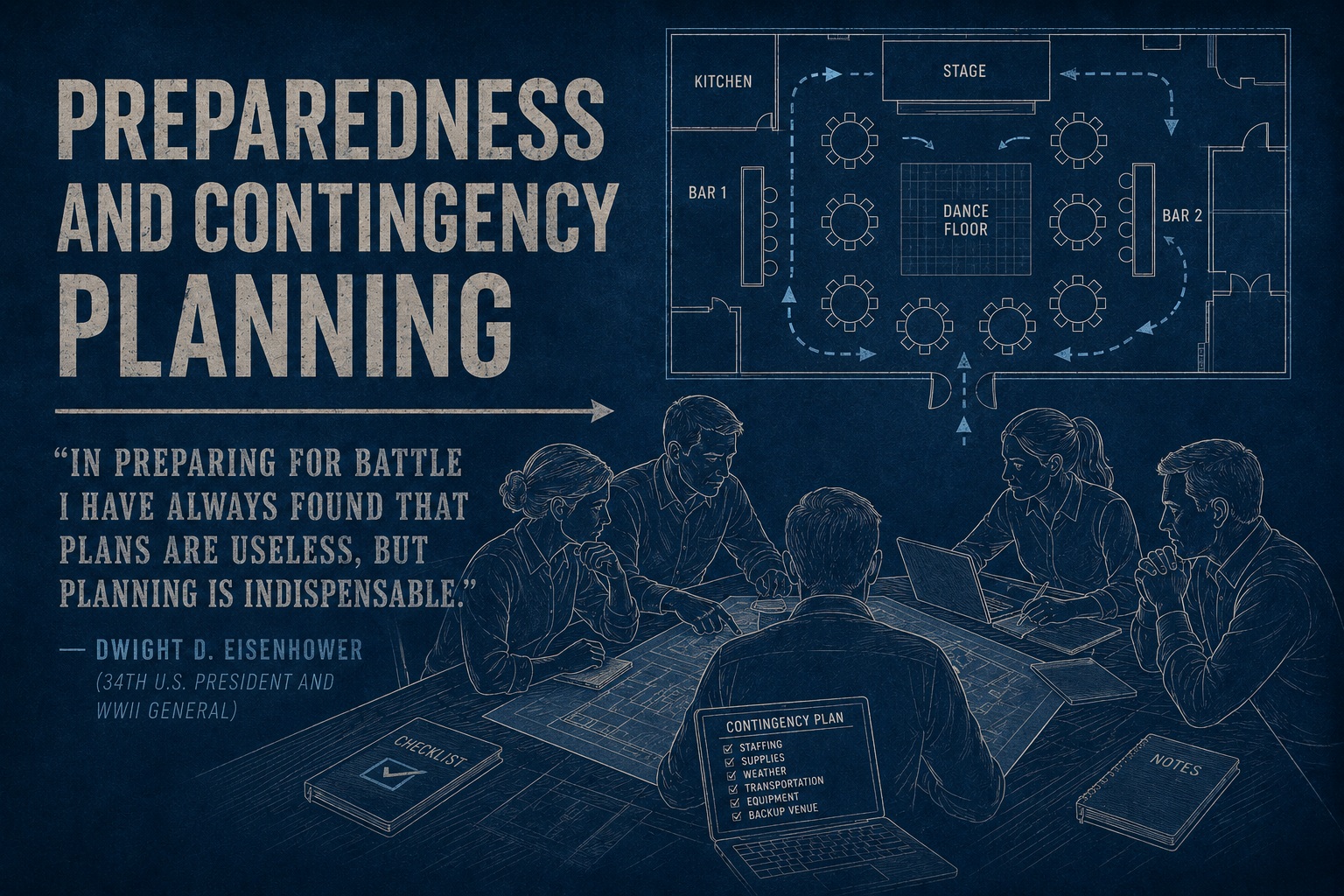
In too many instances, preparations go unshared, plans get changed, and the forces of friction degrade down well-laid plans. In these scenarios, leaders often rush additional staff across the divide to attempt to regain control. However, this enormous waste of time and resources only temporarily settles the matter. More often it creates downstream problems elsewhere. These kinds of events become contests of attrition, where casualties to a seamless guest experience erupt everywhere. We must avoid these kinds of mistakes, yet always be prepared to handle them through preparedness and contingency planning. For example, planning multiple styles of service ensures meeting client and timeline expectations. Initiating additional planning with clients helps to iron out dedicated bar resupply routes, expected flow rates, and adequate spacing needs. Ultimately leaders must accept the responsibility for bringing clients to a place of success by accepting responsibility for their client’s success.
Leaders of bar staff should prepare to modify their environment
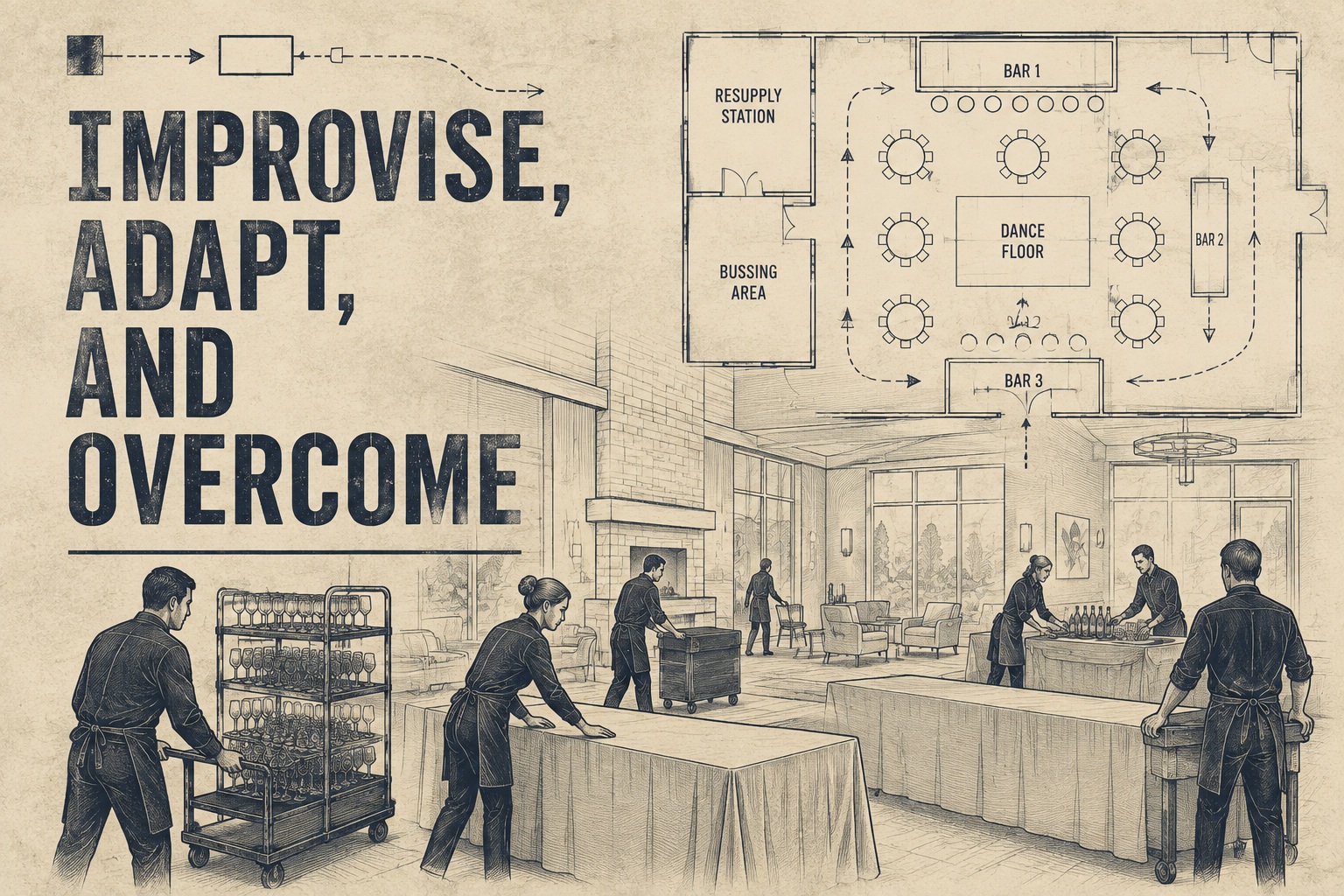
The best event leads know that they must be ready to modify environments as they find them at events. Carving out busing stations from storage rooms or moving tables to accommodate service teams both apply. In short, leads must re-imagine spaces for functionality. Requesting additional space, locating useful storage and co-opting help from facilities staff also apply. They all exemplify ways to secure more and better space to get the job done easier and without incident. Acting preemptively to request more room to operate from planners or clients increases the chances of receiving it. More importantly, they must not underestimate how terrain, weather and reduced visibility impact our tactical disposition. Whether torrential rain, restricted access, or a lack of lighting, event environments will forever remain problematic. Therefore the intelligent appropriation of the event terrain remains a standard practice for successful leaders.
Bartenders for events must prepare for all types of conditions
To be resolute in winning, leaders must rigorously prepare themselves to operate under any circumstances. They must be willing to endure hot, cold or extreme environments. Whether using cell phones to light outdoor bars or umbrellas to cover waiters from rain, leaders must create in situ adaptations. Teams that can operate despite inclement weather or cover of darkness gain significant advantages. Thus, a team that is equipped to operate despite poor lighting will more readily succeed. Many times, two or more conditions such as darkness, wet or cold combine to exacerbate a situation. Therefore, reputable bartender companies should create complementary logistics teams to support their field operations. Ops teams that can request delivery of provisions, lighting and warm clothing can more readily overcome obstacles in their path. But these solutions only flow from involved managers with the willingness to create them upstream from the actual events.
Entropy and the concepts of Cheng and Chi
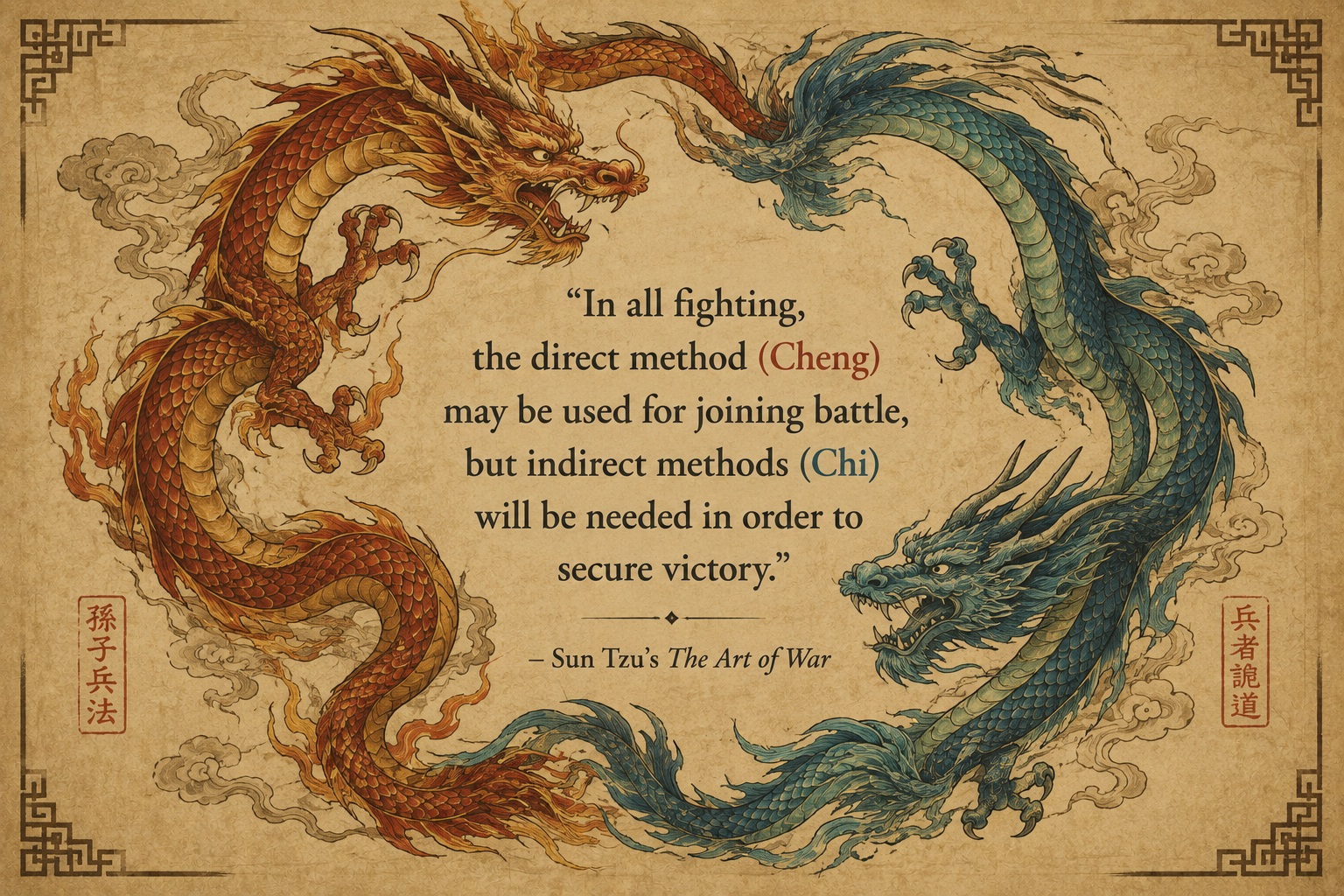
Events run on untested plans based on a series of assumptions about how things will go. We commit resources to the fixed plan, but entropy always interdicts our best efforts. These surprises, ambiguity and perpetual ‘fog of war‘ all serve to degrade our operational performance. Incorrect timelines, unforeseen weather conditions and human error all fit the bill. In fact, no plan survives contact with reality with so many moving parts. In the Art of War, Sun Tzu describes Cheng and Chi as complementary forces. Cheng is the expected action that fixes an opponent in place and biases how it believes things will go. Chi is the hidden and unexpected action that exploits gaps in an opponent’s plans. The concept remains equally useful in business, politics, firefighting and events too.
Prepared bartender companies utilize complementary forces
How can event staffing companies wield Cheng and Chi as complementary forces against entropy? They do so by developing trained staff, established logistics, planned assignments, and standard service protocols as elements of Cheng. However, to form elements of Chi, they must do the extraordinary. They can create logistics hubs with extra place settings, beverages, coffee rounds and snacks for staff. Carving out reserve units for rapid deployment to problem areas also helps tremendously. Also they can equip independent logistics teams to triage and resolve problems without disrupting the main effort. They can lead up the chain of command to bring clients and planners to a place of success. Finally, they can track call-offs to create percentages of extra staff to schedule as standbys. Because like with rappelling anchors, two equals one and one equals none. These go beyond predictive defensive measures to preemptive and proactive counter measures that yield victories.
Events companies must prepare for the future
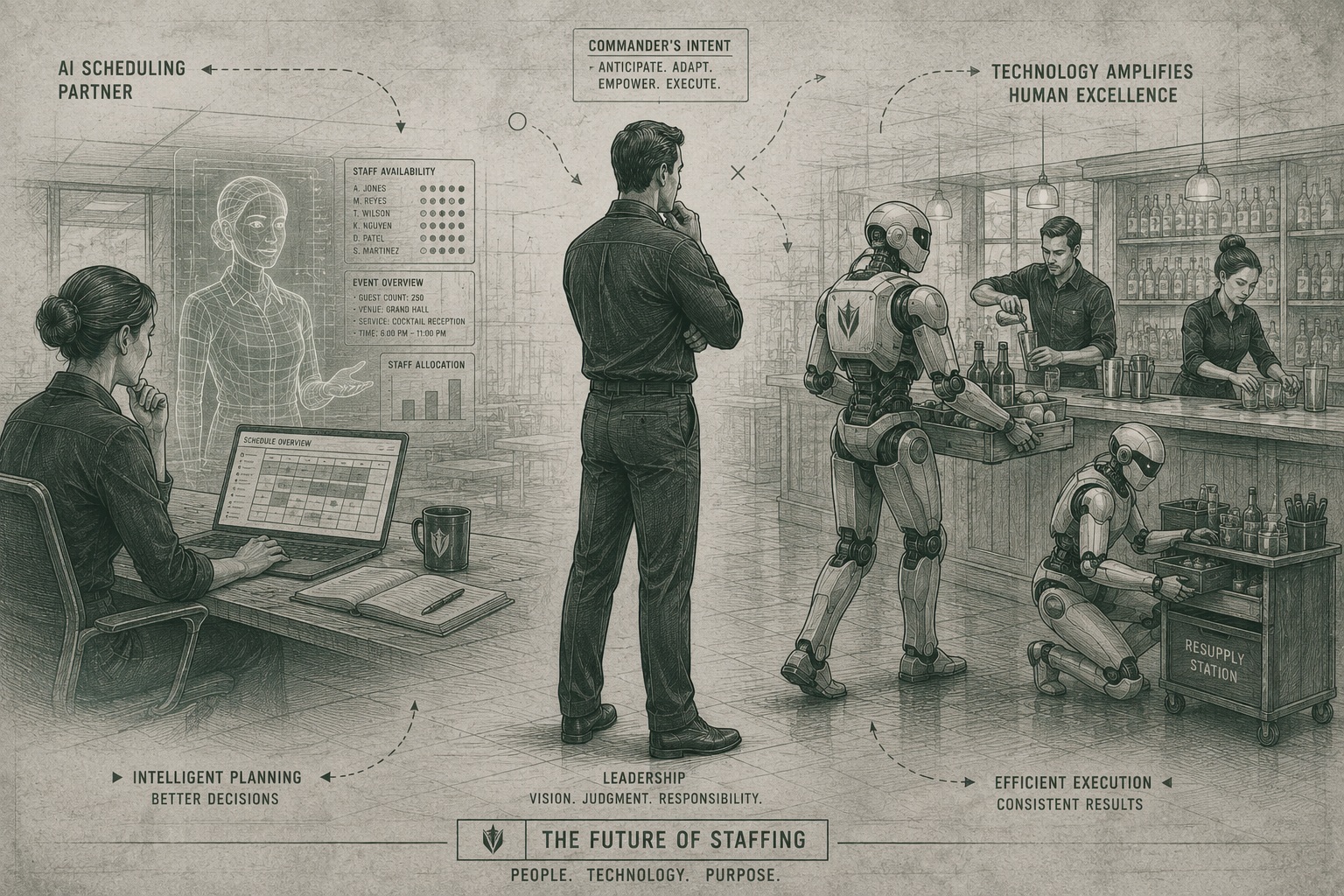
For events companies to achieve iconic status means performing well every time because you’re only as good as your last event. Ergo, relying on past processes, technologies and capabilities will not suffice in our quickly-evolving world. Within this exponential curve of technological advancement, event staffing companies will acquire powerful new tools. This includes agentic AI scheduling and service robots for events. However, regardless of new technologies, effective leadership will remain the single greatest differentiator of the best from the rest. Those companies that dare greatly must pervasively embed the tenets put forth in this manual into their company cultures. But to do so will not be easy, nor without mishaps. Therefore, they must undertake the timeless practice of daring bravely, coming up short, adapting and then pushing forward again. In doing so, they carry on the fine tradition of perseverance that leads to victory!
Sources and Further Reading:
U.S. Marine Corps. Tactics (MCDP 1-3). July 30, 1997. Read Official PDF