


Sporting Event Guest Services for Stadiums, Arenas and Fan Festivals
- Sporting event guest services help support crowd movement, guest communication, registration systems, and venue navigation during large events.
- Modern sporting events often require layered staffing systems across entrances, transportation zones, hospitality environments, fan festivals, and outdoor activations.
- Guest services teams frequently coordinate with sporting event security, service staff, registration staff, and venue managers throughout the event cycle.
- Large sporting events may involve scanning badges, giving directions, VIP guidance, crowd assistance, and other attendee support.
- Professional guest services staffing helps create organized and welcoming event environments while improving the overall attendee experience.
Sporting Event Guest Services Help Guide Crowd Movement
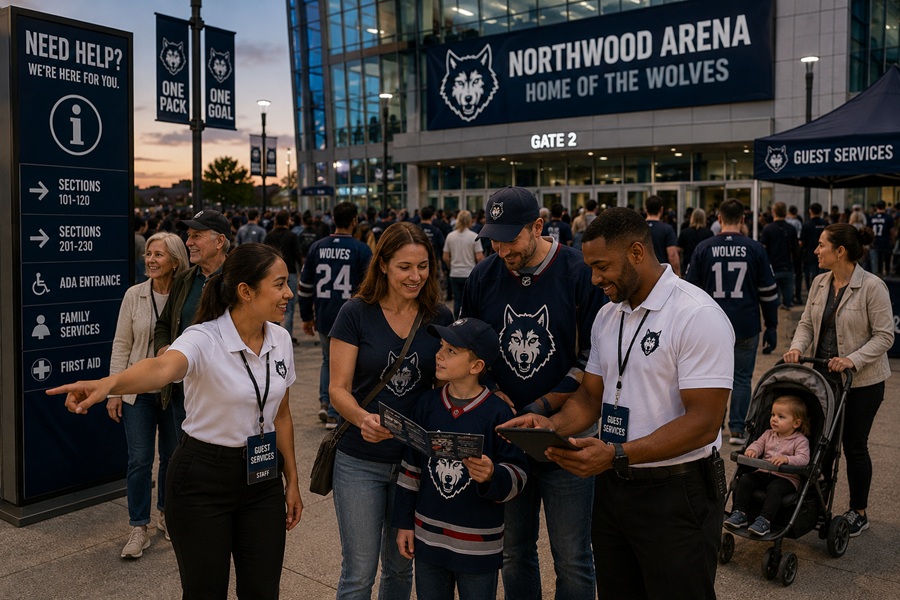
Guest services help create organized and welcoming environments throughout stadiums, fan festivals, arenas, tournaments, and entertainment districts. Guests often interact with guest services personnel before speaking with any other event staff. These early interactions help shape the overall experience while establishing a sense of organization and direction from the moment attendees arrive. Modern sporting events involve far more than seating guests inside a stadium. Large crowds may move continuously between parking areas, transportation hubs, fan festivals, hospitality lounges, vendor zones, sponsor activations, concerts, and surrounding entertainment districts throughout the day. Guest services teams help maintain structure across these changing environments while supporting smoother movement between operational zones.
Guest services staff frequently assist with directions, registration , badging and seating assistance. They also facilitate crowd movement, VIP check in, parking coordination, and information desk operations. These positions require strong communication skills, professionalism, visibility, and the ability to remain calm within high attendance environments. Large sporting events also create temporary operational ecosystems extending beyond the primary venue footprint. Event organizers often need staffing teams capable of supporting multiple guest interaction points simultaneously while maintaining consistent communication and presentation standards throughout the event. Industry discussions regarding large event crowd management systems continue emphasizing the importance of organized guest communication and pedestrian routing within high attendance environments.
Supporting Entry Operations and Venue Navigation
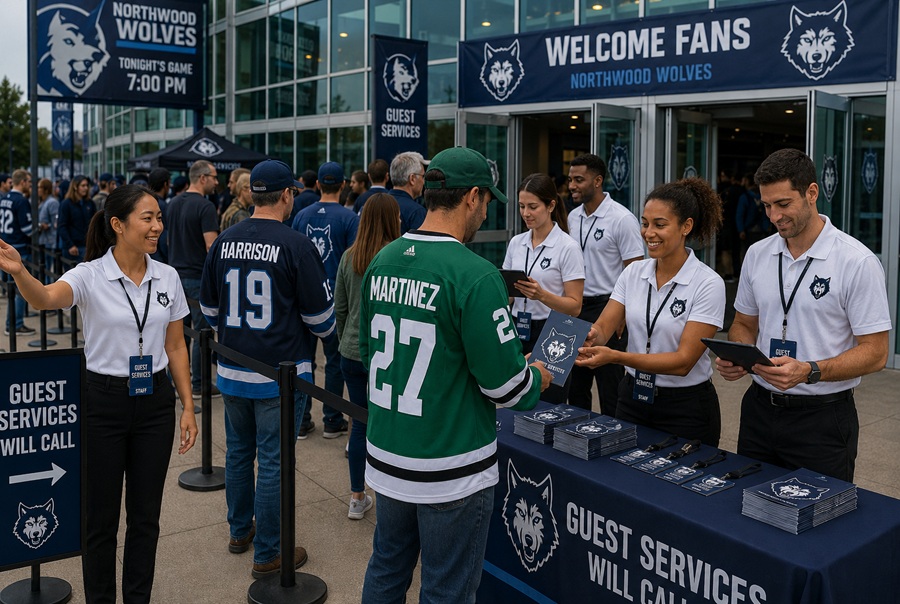
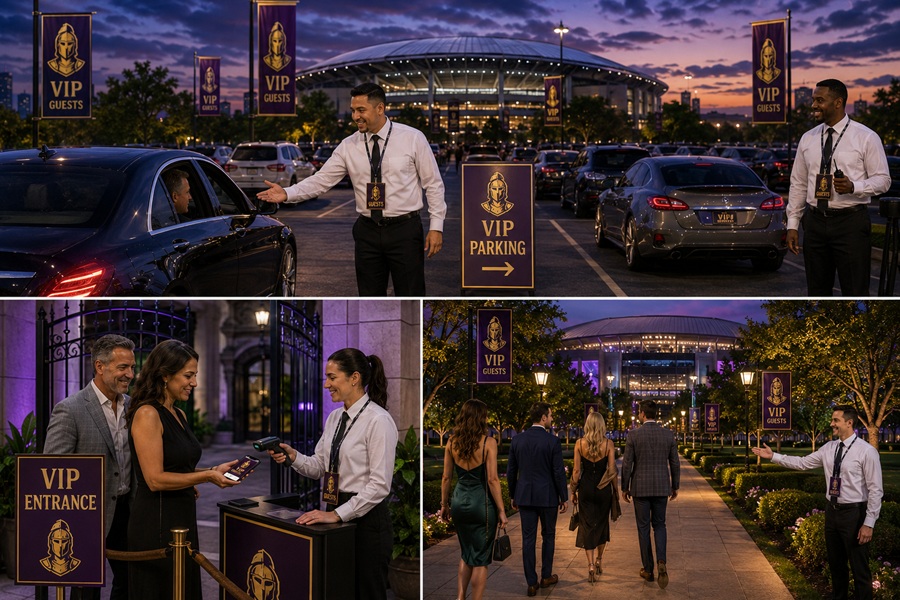
Entry operations represent one of the most visible areas within sporting event guest services planning. Guests typically encounter ushers, greeters, directional staff, parking attendants, or registration personnel immediately upon arrival. Professional communication and organized staffing help establish a welcoming and structured atmosphere from the beginning of the event experience. Sporting event guest services staff often support screening areas, directional corridors, pedestrian routing systems, escalator zones, and venue checkpoints. Teams may help guide attendees toward entrances, ticket scanning areas, transportation pickup zones, hospitality environments, or seating sections throughout the venue.
Many large sporting events also involve temporary traffic patterns and modified pedestrian routes surrounding stadium districts. Construction activity, sponsor activations, concerts, fan festivals, and transportation systems may all affect crowd movement throughout the day. Guest services personnel help attendees adapt to these changing conditions through visible communication and active guidance. Well positioned staffing teams often help prevent crowd congestion before operational problems develop. Calm communication and visible directional support improve guest confidence while helping venues maintain smoother movement patterns throughout high attendance periods. Large venues often rely heavily on directional staff, ushers, and parking attendants to support organized guest movement throughout stadium districts and entertainment environments.
Sporting Event Guest Services Support Registration and Check In Operations
Sporting event guest services teams frequently assist with registration systems and attendee intake operations during large scale events. Many tournaments, fan festivals, sponsor experiences, hospitality functions, and VIP environments require organized guest processing before attendees enter restricted operational areas. Registration operations may involve credential verification, badge scanning, invitation confirmation, digital check in systems, ticket assistance, attendee guidance, or information desk support. Organized staffing helps maintain consistent movement while reducing delays near entry checkpoints.
Sporting event guest services personnel working registration environments often operate within highly visible public areas. Professional appearance, communication, and organization therefore become especially important during guest intake operations. Modern events increasingly rely on organized registration and attendee management systems to support faster guest processing and smoother entry experiences.
Managing Badge Scanning and Guest Intake
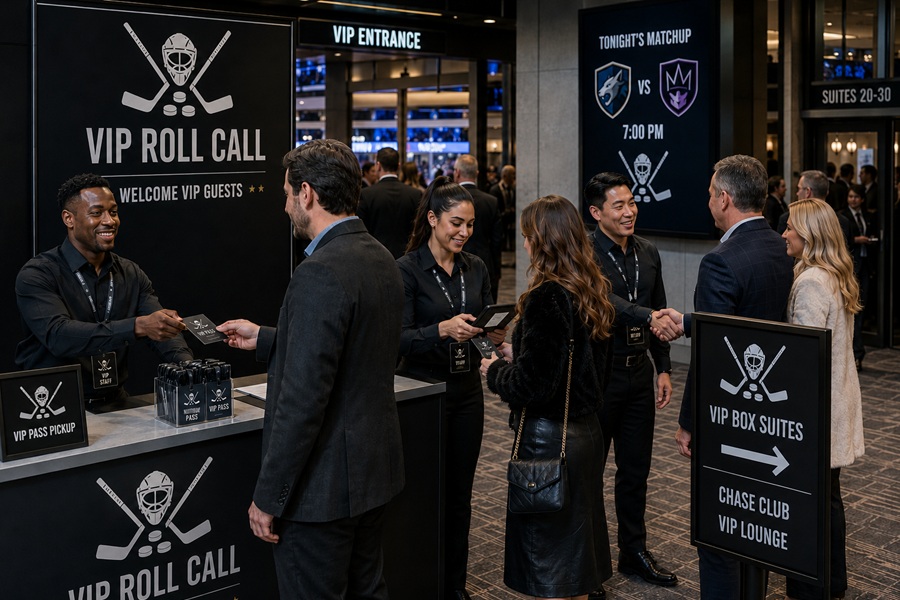
Many modern sporting events rely heavily on digital credential systems and mobile ticketing technology. Sporting event guest services teams frequently assist attendees with scanning procedures, digital verification, registration troubleshooting, and credential questions throughout the event cycle. Large sporting events may also involve separate intake systems for media personnel, vendors, sponsors, athletes, VIP guests, and operational staff. Registration teams often help direct these groups toward appropriate processing areas while maintaining organized movement throughout the venue footprint.
Guest services personnel working registration operations frequently coordinate closely with sporting event security teams during high attendance periods. These coordinated systems help maintain efficient guest flow while preserving organized entry procedures throughout the venue. Guest intake systems also overlap directly with badge scanning operations, registration staffing, and bag inspection procedures throughout many large sporting event environments.
Sporting Event Guest Services Coordinate with Security and Hospitality Teams
Sporting event guest services operations often function alongside security personnel, hospitality divisions, event managers, transportation teams, and venue representatives throughout the event cycle. Large scale sporting events require communication systems remaining coordinated across multiple staffing divisions simultaneously. Guest services teams frequently help bridge the gap between operational structure and guest experience. While security personnel focus on controlled access and venue safety, guest services personnel often provide directions, crowd communication, seating assistance, and attendee guidance throughout public environments.
Sporting event guest services staff may also assist hospitality teams supporting executive lounges, sponsor receptions, premium suites, and VIP activations. These environments often require staffing teams capable of balancing organization with polished guest interaction. Large venues frequently rely on coordinated communication between crowd control staff, guest services personnel, hospitality teams, and venue managers during periods of elevated attendance and changing crowd movement.
Supporting VIP and Premium Guest Experiences
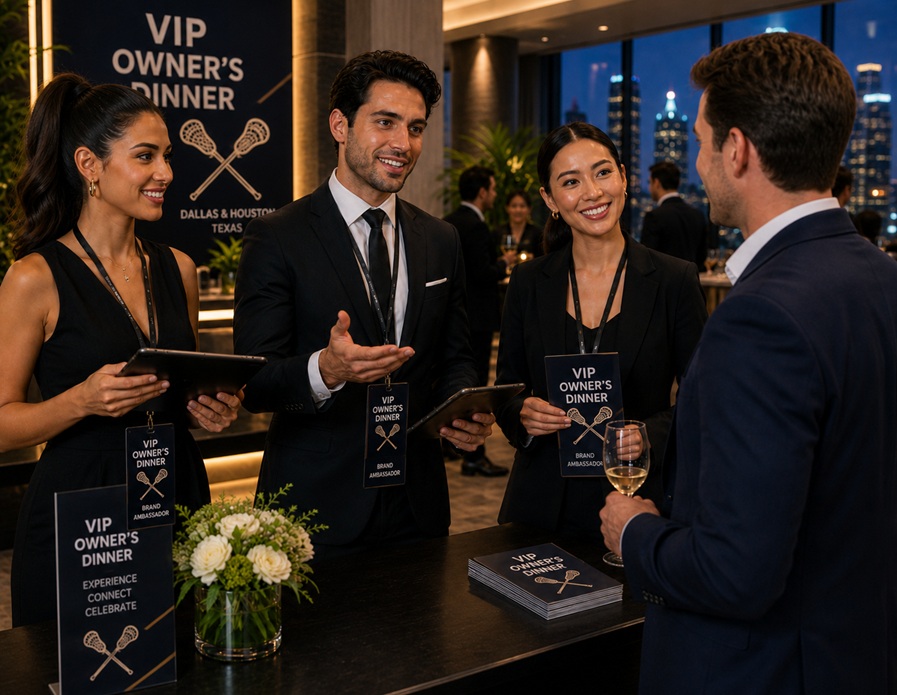
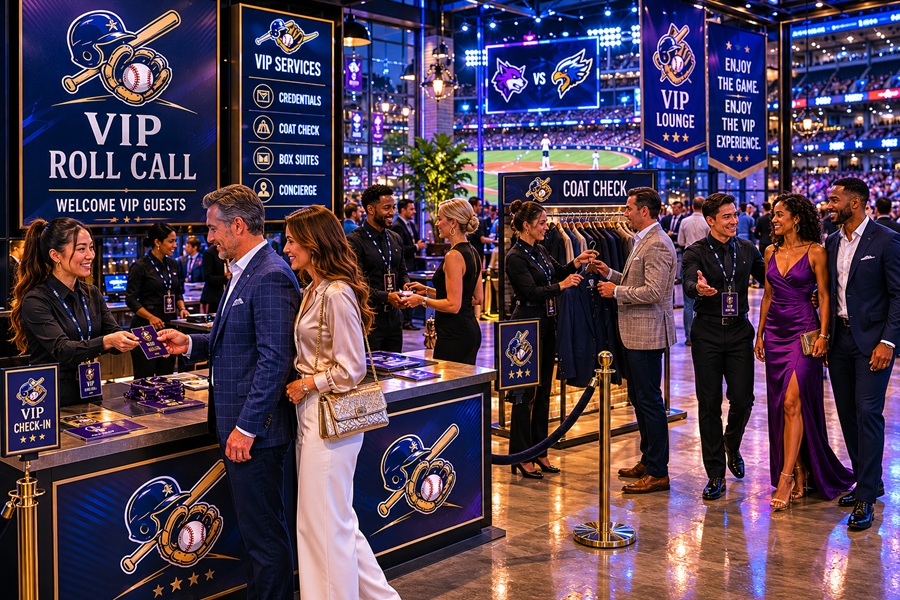
VIP operations create additional staffing requirements throughout many sporting event environments. Premium entrances, hospitality lounges, executive receptions, and sponsor experiences often require specialized guest services coverage. Sporting event guest services teams may assist with invitation verification, credential scanning, directional escorting, coat check coordination, transportation guidance, and hospitality transitions near premium operational areas. Professional presentation becomes especially important within these upscale environments. Many sporting events also involve sponsor gatherings, media receptions, executive dinners, athlete appearances, or private hospitality functions operating alongside the primary event.
Guest services personnel often help maintain organized movement while preserving a welcoming atmosphere throughout these environments. Premium environments often overlap closely with sporting event hospitality staff operations supporting executive guests, sponsors, and private event functions. Guests attending premium sporting event environments often expect a more polished level of interaction throughout the event cycle. Calm communication, visible professionalism, and organized guest guidance help reinforce the atmosphere event organizers work carefully to create within these upscale environments.
Sporting Event Guest Services Support Fan Festivals and Outdoor Activations
Modern sporting events frequently extend beyond the stadium itself into surrounding entertainment districts and outdoor public environments. Cities often host fan festivals, sponsor villages, vendor activations, concerts, outdoor viewing parties, and interactive experiences during major sporting events. Sporting event guest services teams often help support these large outdoor environments through directional guidance, information desk operations, pedestrian routing, registration support, crowd communication, and transportation. These operational footprints may extend across several city blocks during periods of peak attendance.
Outdoor event environments also create changing operational conditions throughout the day. Guest services personnel may need to adjust movement patterns, entry routing systems, and communication procedures as attendance levels increase or environmental conditions change. Many cities now rely on organized pedestrian flow and guest movement systems to help maintain organization throughout high attendance outdoor events.
Helping Guests Navigate Large Event Environments
Large sporting events often involve complex venue layouts with distinct zones. Guests may move repeatedly between transportation hubs, fan festivals, sponsor activations, hospitality environments, and stadium entrances throughout the event cycle. Sporting event guest services personnel help attendees navigate these environments more efficiently through active communication and visible staffing placements. Directional support teams, greeters, and information desk staff frequently help reduce confusion while improving crowd movement throughout large operational footprints. High attendance events also create temporary pressure points near escalators, intersections, transportation corridors, vendor areas, and stadium entrances.
Guest services personnel often help regulate movement within these environments before crowd congestion develops into larger crowd control problems. Many sporting event organizers also rely on greeters, room monitors, and booth attendants to support communication throughout fan engagement and sponsor activation environments. Outdoor sporting environments rarely remain static throughout the day. Transportation delays, weather changes, crowd surges, schedule adjustments, and entertainment programming may all affect movement patterns across fan festivals and surrounding event districts. Guest services teams capable of adapting calmly often help stabilize the overall attendee experience during these shifting conditions.
Sporting Event Guest Services Require Professional Staffing Teams
Successful sporting event guest services operations depend heavily on communication, visibility, professional conduct, reliability, and adaptability. Guest services personnel regularly operate within highly visible public environments where staff presentation directly influences attendee perception. Sporting event guest services teams may interact with venue executives, VIP guests, sponsors, athletes, media representatives, vendors, transportation personnel, and large crowds throughout a single shift. Event organizers often value staffing teams capable of remaining calm and professional during changing conditions.
Large sporting events also require staffing providers capable of scaling operations rapidly across multiple environments simultaneously. Attendance levels, transportation flow, weather conditions, and crowd movement patterns may all affect staffing requirements throughout the event cycle. Large venues frequently seek event staff providers capable of supporting guest communication and public interaction across multiple public zones.
Flexible Staffing Across Multiple Operational Zones
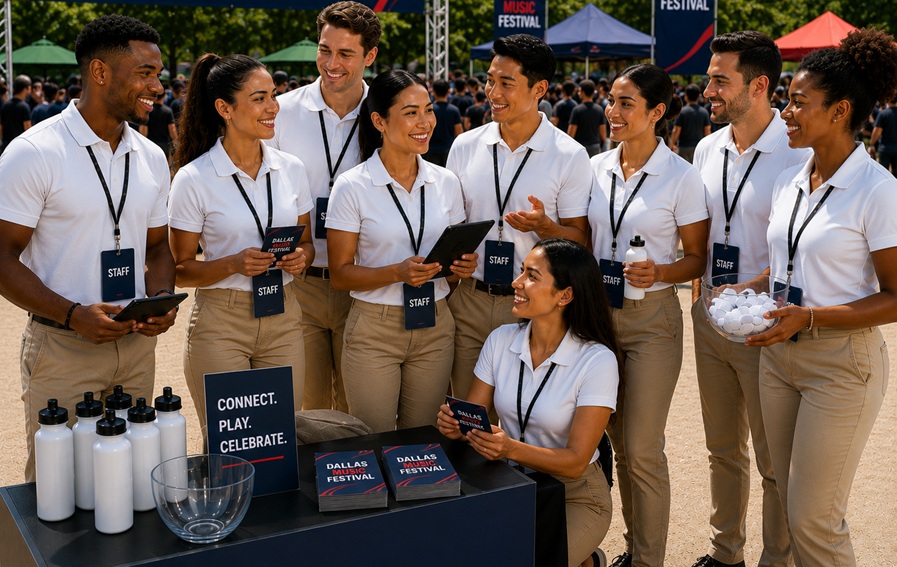
Modern sporting events often combine stadium operations, outdoor activations, hospitality environments, transportation systems, sponsor experiences, and entertainment districts into one large ecosystem. Guest services teams must therefore remain coordinated across multiple event zones throughout the day. Sporting event guest services personnel frequently transition between responsibilities as needs change. Teams may assist with registration operations during early entry periods before shifting toward directional guidance, seating assistance, crowd communication, or transportation coordination later in the event cycle.
Event organizers often benefit from staffing agencies understanding how guest services combine with security, hospitality and event coordinators. Syncing staffing structures helps large events operate smoothly while supporting better guest experiences throughout the venue. Complex sporting event environments function most effectively when staffing teams understand the mechanics of large events. These include how crowd movement, transportation systems, hospitality operations, and public communication influence one another throughout the event. Coordinated staffing helps create smoother transitions between operational areas while improving the overall attendee experience.
Reliable Sporting Event Guest Services Improve the Overall Event Experience
Sporting event guest services support much more than directional assistance alone. Organized staffing helps improve crowd movement, guest communication, event flow, and overall attendee experience throughout large scale events. Modern sporting events now function as large entertainment ecosystems combining sports, hospitality, transportation systems, sponsor activations, live entertainment, and fan engagement environments. These complex systems require staffing teams capable of staying organized while supporting positive public interaction. From stadium entrances and registration checkpoints to VIP lounges and outdoor fan festivals, sporting event guest services personnel help support smoother and more organized event experiences for attendees, venue operators, and event organizers alike.