


Sporting Event Staff for Large Scale Events
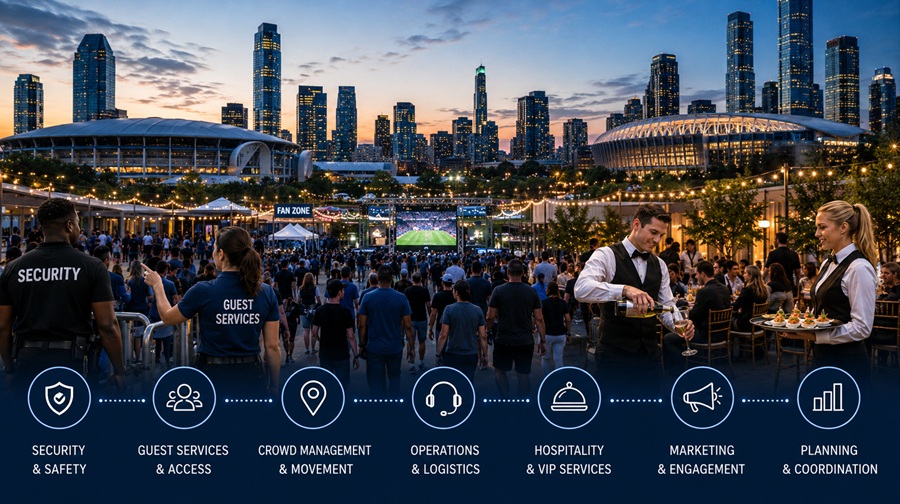
- Sporting event staff support stadiums, fan zones, hospitality environments, and sponsor activations during major events.
- Large sporting events create temporary surges in crowd movement, staffing demand, and logistical complexity throughout host cities.
- Security, guest services, hospitality, and marketing divisions often work together across multiple event environments simultaneously.
- Transportation corridors, entertainment districts, hotels, and nearby businesses often experience increased activity during major sporting events.
- Organizations that plan early can align staffing structures with changing attendance patterns and guest movement throughout the day.
Sporting Event Staff Operate Across Multiple Environments
Sporting event staff rarely operate within a single stadium footprint because major events spread activity across the region. This includes hospitality districts, transportation hubs, entertainment corridors, and sponsor environments throughout the city. Guests move continuously between hotels, parking zones, fan festivals, restaurants, corporate gatherings, and nightlife districts before and after matches or headline events. In these environments, sporting event staff support event continuity across multiple locations while adapting to changing crowd conditions. This layered structure requires staffing systems that account for geography, timing, crowd density, and venue type. Large events cannot be treated as a single zone.
Dallas and Houston both demonstrate how sporting event staff support entire sections of a city during periods of peak attendance. Activity near Arlington entertainment districts, Uptown Dallas, East Downtown Houston, and NRG Park can create simultaneous pressure across transportation, hospitality, guest services, and event staffing categories. Sporting event staff help organizations maintain structure across these overlapping environments while preserving guest experience and venue efficiency. A coordinated staffing approach allows planners to support movement patterns that evolve throughout the day. This reduces the need to react to congestion after it develops.
Modern stadium environments also rely heavily on event planning because crowd movement extends far beyond ticket gates and seating sections. Research regarding moving stadium crowds efficiently demonstrates how transportation systems, pedestrian flow, and ingress timing influence attendee experience during major events.
Coordinating Movement Through High Traffic Areas
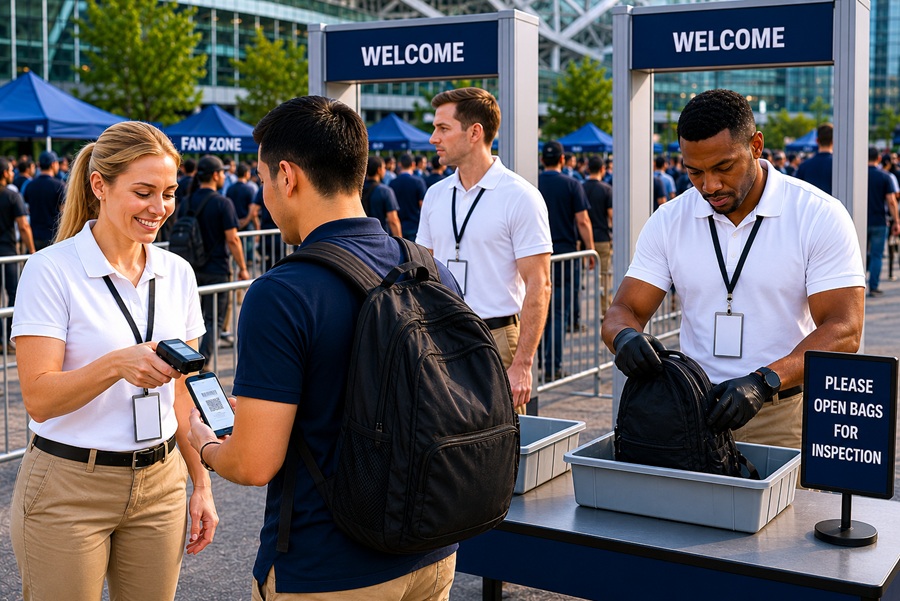
Large crowds naturally create pressure points near entrances, transportation corridors, parking zones, and pedestrian bottlenecks. Sporting event staff positioned throughout these areas help regulate movement before congestion begins affecting guest flow or scheduling. Directional teams, guest services personnel, and support staff work together to guide attendees toward checkpoints, registration areas, seating sections, and hospitality environments. Clear communication and visible staffing presence help reduce confusion. These practices also maintain organized movement patterns across complex event footprints.
Transportation infrastructure also influences how sporting event staff deployment plans must be structured during large scale events. Guests often arrive in waves based on parking availability, transit timing, nearby entertainment schedules, and staggered event activity. Sporting event staff help organizations adapt to these fluctuations by maintaining flexible coverage throughout the day. Teams should not concentrate resources only at opening periods. This flexibility becomes increasingly important as crowd density rises near stadium districts and adjacent entertainment zones.
Sporting Event Security Supports Crowd Control and Entry Operations
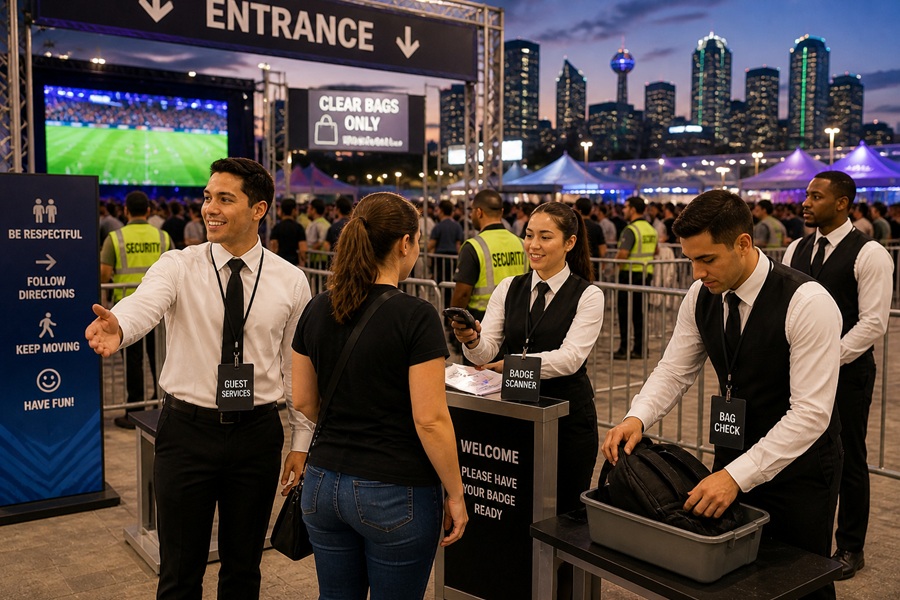
Sporting event security forms one of the foundational layers within high attendance environments because crowd movement must remain organized and predictable during periods of peak attendance. Event staff assigned to security operations often support crowd control, bag checks, badge scanning, perimeter monitoring, and access management throughout the venue footprint. These roles help maintain structure while supporting a smooth guest experience across entrances, checkpoints, hospitality zones, and restricted areas. Unlike traditional law enforcement functions, sporting event security staffing focuses primarily on organization, visibility, access regulation, and guest support.
High attendance environments require staffing systems that can maintain control without creating unnecessary friction for attendees. Sporting event staff assigned to security functions help regulate flow patterns while supporting venue communication simultaneously. Ushers, crowd control teams, and access support personnel often work alongside sporting event guest services divisions to direct attendees efficiently through crowded environments. This layered approach improves consistency while reducing congestion at key transition points throughout the venue. Many venues now rely on advanced event crowd management strategies to support large attendance environments. These systems help maintain efficient movement throughout the venue footprint.
Maintaining Safe and Organized Event Environments
Large sporting events depend on calm event environments because disorder at entrances or gathering points can quickly disrupt broader crowd flow. Sporting event staff positioned at visible control points help guide attendees while preserving accessibility throughout the venue. Staff assigned to crowd movement responsibilities often manage barricade lines, directional transitions, restricted access points, and credential verification areas during peak attendance periods. Their presence helps maintain predictable movement patterns. This reduces confusion before larger disruptions develop.
Event staffing also helps venues adapt to changing crowd conditions throughout the day. Attendance surges near halftime, match conclusion, transportation departures, and sponsor activations often create temporary pressure spikes. These spikes require flexible deployment strategies. Sporting event staff trained to support crowd movement can shift between entry support, directional assistance, and venue coverage as conditions evolve across the event footprint. This adaptability helps organizations maintain consistency while supporting guest experience during changing event conditions.
Sporting Event Guest Services Help Guide Attendee Experience
Sporting event guest services operate as the public-facing communication layer within many sporting event environments because attendees frequently require assistance navigating unfamiliar venues and crowded event zones. Guest services staff roles may include greeters, directional staff, registration support, information desks, parking attendants, and attendee assistance personnel positioned throughout the event footprint. These teams help visitors move confidently between entrances, hospitality areas, fan zones, seating sections, and transportation corridors. This support prevents additional strain on the venue environment.
Large sporting events often involve temporary venue modifications, sponsor installations, and expanded pedestrian zones. Road closures can further complicate movement throughout surrounding districts. Sporting event staff assigned to guest services roles help attendees adapt to these changing conditions through visible guidance and real time communication. This support becomes particularly important within downtown entertainment districts and large fan environments. Visitors may move repeatedly between multiple event locations during the same day. Organizations increasingly rely on large scale guest flow systems to help regulate attendee pacing and improve movement through crowded event environments.
Helping Large Crowds Navigate Complex Event Spaces
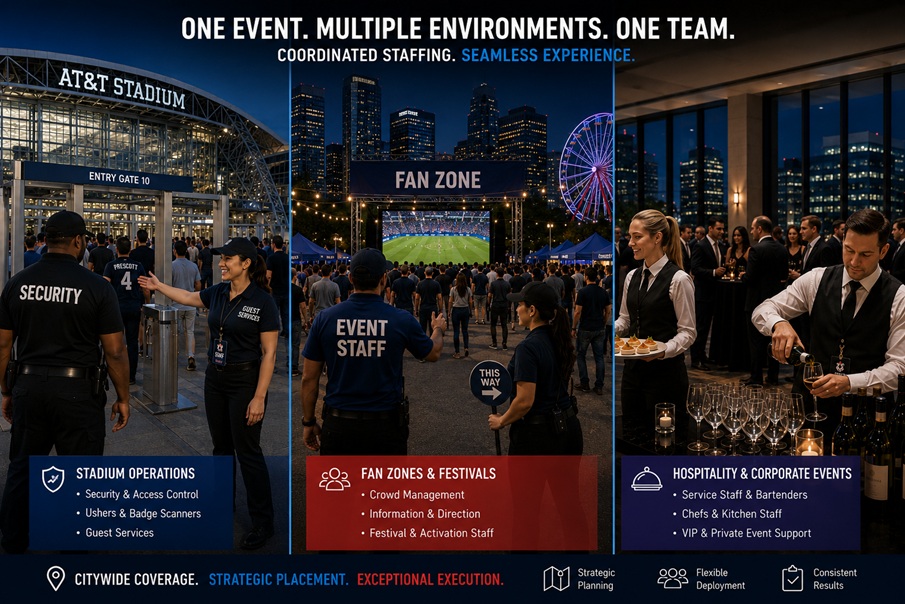
Complex event environments require more than static signage because crowd behavior changes constantly based on timing, density, weather conditions, and nearby activity. Sporting event staff supporting guest services operations help organizations respond dynamically by adjusting guidance patterns as congestion develops across entrances, corridors, and public gathering areas. Staff positioned throughout these environments can redirect movement, answer questions, and communicate event changes before confusion spreads through larger crowd sections.
Registration and attendee support functions also become increasingly important during large sporting events that involve credentialed access, sponsor hospitality, corporate receptions, or private event environments. Sporting event staff supporting these areas help maintain organization while preserving a welcoming and professional atmosphere for guests. Effective guest services operations improve attendee experience. They also reduce pressure on security teams and venue management personnel.
Sporting Event Hospitality Staff Support VIP and Corporate Events
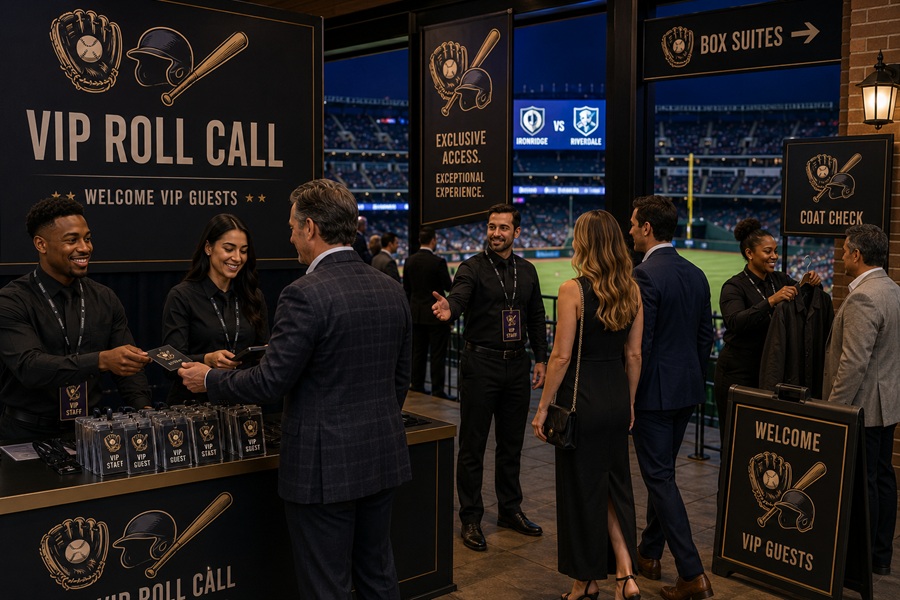
Sporting event hospitality staff create another important layer during major sporting events because corporate gatherings, sponsor receptions, VIP lounges, and private events frequently operate alongside public event activity. Service staff assigned to hospitality operations may include bartenders, wait staff, banquet staff, catering staff, bussers, and kitchen support teams working across hotels, suites, reception venues, and entertainment districts throughout the city. These environments require staffing systems capable of maintaining service consistency during high attendance periods.
Large sporting events often increase hospitality demand across multiple venue types simultaneously. Restaurants near stadium districts may experience elevated guest volume while private corporate events operate in parallel across hotels and hospitality lounges. Sporting event staff assigned to hospitality divisions help organizations maintain presentation standards, service timing, and coordination throughout these high demand periods. A well-structured hospitality team allows venues and event organizers to preserve guest experience. It also prevents internal personnel from becoming overextended. Hospitality operators increasingly discuss the importance of hospitality staffing for large events as attendance continues expanding across stadium districts and entertainment corridors.
Maintaining Service Quality During High Volume Events
Hospitality environments must remain organized even as crowd density and event activity increase across surrounding districts. Sporting event staff supporting hospitality operations help maintain consistency by assisting with setup, food service, beverage execution, breakdown, and guest interaction throughout extended event windows. These teams often work across multiple environments within the same day. This requires flexibility and coordination between venue management, catering operations, and event leadership teams.
Different hospitality environments also require different staffing structures depending on guest expectations and event complexity. Formal sponsor receptions, executive hospitality suites, and large banquet environments all demand distinct service approaches that align with the atmosphere of the event. Sporting event staff help organizations adapt staffing models to venue type while maintaining continuity across broader event activity. This flexibility becomes increasingly important during multi-day events that create overlapping hospitality demand throughout the city.
Sporting Event Marketing Staff Support Fan Engagement and Activations
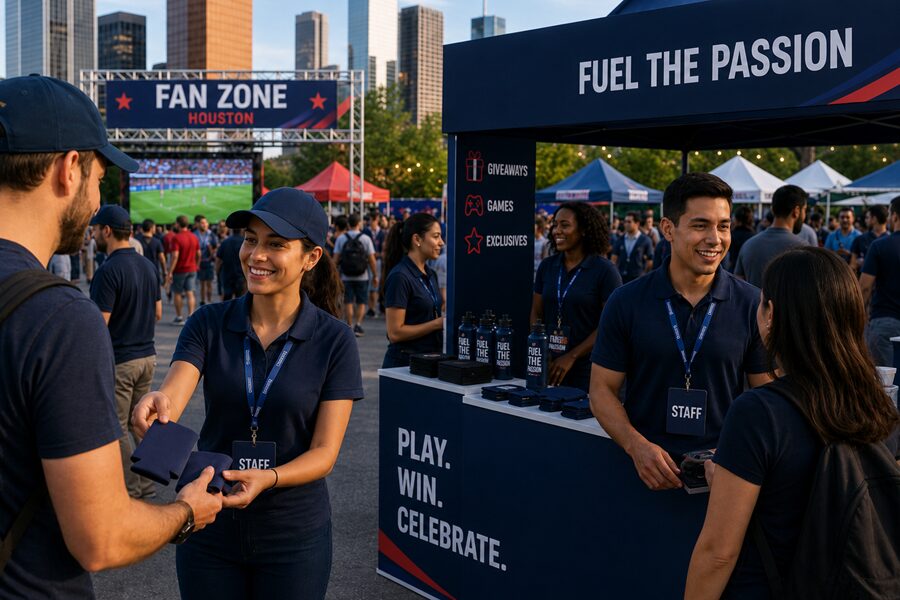
Sporting event marketing staff support experiential environments because sponsors, vendors, and promotional campaigns often operate continuously throughout the event cycle. Temp staff assigned to marketing roles may include brand ambassadors, booth attendants, promotional teams, fan engagement personnel, and experiential marketing support staff positioned throughout fan festivals, sponsor activations, hospitality lounges, and vendor areas. These roles focus on interaction, communication, product engagement, and attendee participation within highly visible public environments.
Fan engagement environments operate differently from traditional hospitality or staffing zones because they rely heavily on energy, communication, and sustained attendee interaction throughout long event windows. Sporting event staff assigned to marketing functions help brands maintain organized and engaging experiences while supporting broader crowd flow. These teams often operate in high traffic outdoor environments where crowd density changes rapidly throughout the day. Match schedules, entertainment programming, and transportation patterns all influence movement.
Modern brands increasingly rely on sports marketing activations to create immersive fan experiences that extend beyond the stadium itself.
Creating Interactive Experiences Beyond the Stadium
Modern sporting events frequently extend far beyond the stadium through fan festivals, sponsor villages, entertainment districts, and experiential marketing environments spread throughout the host city. Sporting event marketing staff help organizations maintain consistency across these distributed activation zones while supporting sponsor visibility and attendee participation. Their role often involves balancing coordination with guest engagement. Activations must remain organized without losing energy or accessibility.
Large activations may also operate simultaneously across multiple locations, requiring staffing capable of brand presentation throughout the city. Sporting event staff trained in experiential environments help organizations maintain communication standards, product knowledge, and attendee interaction quality across these distributed campaigns. This coordination allows sponsors and vendors to create stronger public engagement while aligning with broader event activity.
Sporting Event Staff Require Coordinated Planning
Large sporting events place simultaneous pressure on security operations, guest movement, hospitality execution, marketing environments, transportation systems, and venue logistics throughout the host city. Sporting event staff help organizations manage these overlapping demands through layered event planning that aligns staffing structures with actual event conditions. Effective staffing systems account for movement patterns, attendance fluctuations, timing, venue geography, and environmental complexity before deployment begins.
Coordination between staffing divisions becomes increasingly important as event size expands across multiple environments. Security teams may require support from guest services personnel near entrances and transportation corridors. Hospitality environments often overlap with sponsor activations and fan engagement areas. Sporting event staff help organizations maintain communication between these divisions while preserving flexibility throughout changing event conditions. This integrated approach reduces staffing gaps while improving consistency across the event footprint.
Industry discussions regarding complex event staffing operations continue emphasizing the importance of layered staffing systems during major public events.
Building Staffing Systems That Scale With Attendance
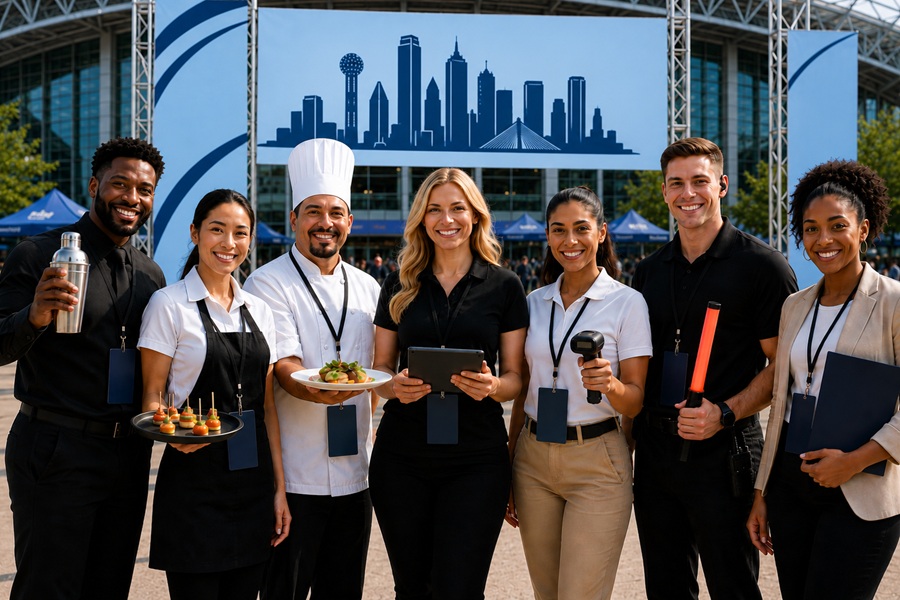
Attendance levels rarely remain static throughout a large sporting event because crowd density fluctuates continuously based on scheduling, transportation patterns, entertainment activity, and weather conditions. Sporting event staff help organizations adapt to these changes through flexible deployment strategies that allow teams to shift between competing priorities as needed. This scalability becomes particularly important during major citywide events where staffing demand extends beyond the primary venue.
Organizations that plan early often maintain stronger onsite control because staffing providers can build more structured deployment systems before peak demand periods begin. Sporting event staff assigned to large scale events require layered scheduling, leadership hierarchy, and adaptable plans throughout the event. A flexible staffing model allows organizations to respond more effectively to changing conditions. It also preserves continuity across multiple environments.
Sporting Event Staff Support More Than Stadiums
Large sporting events create temporary ecosystems that extend across hotels, restaurants, transportation, entertainment venues, and private events throughout the host city. Sporting event staff help support these surrounding environments while establishing continuity between public event activity and private hospitality functions. Activity may begin near stadium districts, but demand often spreads into adjacent neighborhoods and business corridors throughout the day.
Cities hosting major sporting events frequently experience overlapping pressure across hospitality, transportation, entertainment, and corporate event sectors simultaneously. Sporting event staff help organizations adapt to this temporary surge economy by supporting flexible placement across multiple environments. This broader staffing structure allows businesses and event organizers to maintain consistency even as attendance patterns and crowd movement evolve.
Reliable Sporting Event Staff Help Large Events Operate Smoothly
Successful sporting events depend on more than crowd size or venue scale because consistency shapes guest experience. Sporting event staff help maintain structure across security operations, guest services, hospitality environments, and fan engagement systems. They also support movement throughout complex event footprints. Coordinated staffing allows organizations to adapt to changing conditions without sacrificing communication, presentation, or venue control.
Large scale events require staffing providers capable of supporting multiple divisions simultaneously while maintaining flexibility under pressure. Sporting event staff trained across diverse event environments help organizations preserve consistency throughout high attendance periods and distributed event activity. A coordinated approach allows large sporting events to function more smoothly across both stadium environments and the surrounding citywide ecosystem.